
The Nostalgia: Recreating a DOS Classic
The idea for this project stems from pure nostalgia. I used to play a very specific 3D version of Tetris on a DOS environment when I was a teenager. It was mesmerizing to rotate pieces in three dimensions and drop them into a deep well.
Rather than spending weeks writing a custom 3D rendering engine and complex collision logic from scratch, I wanted to see if an AI agent like Antigravity could handle the heavy lifting, allowing me to focus entirely on the game mechanics and the "vibe" of the experience.
Application Interface
The final result is a fully functional, browser-based 3D Tetris game. The interface features a dark neon, deep space aesthetic that perfectly captures the retro-futuristic feel of the original DOS game, complete with transparent layers and intuitive HUD controls.
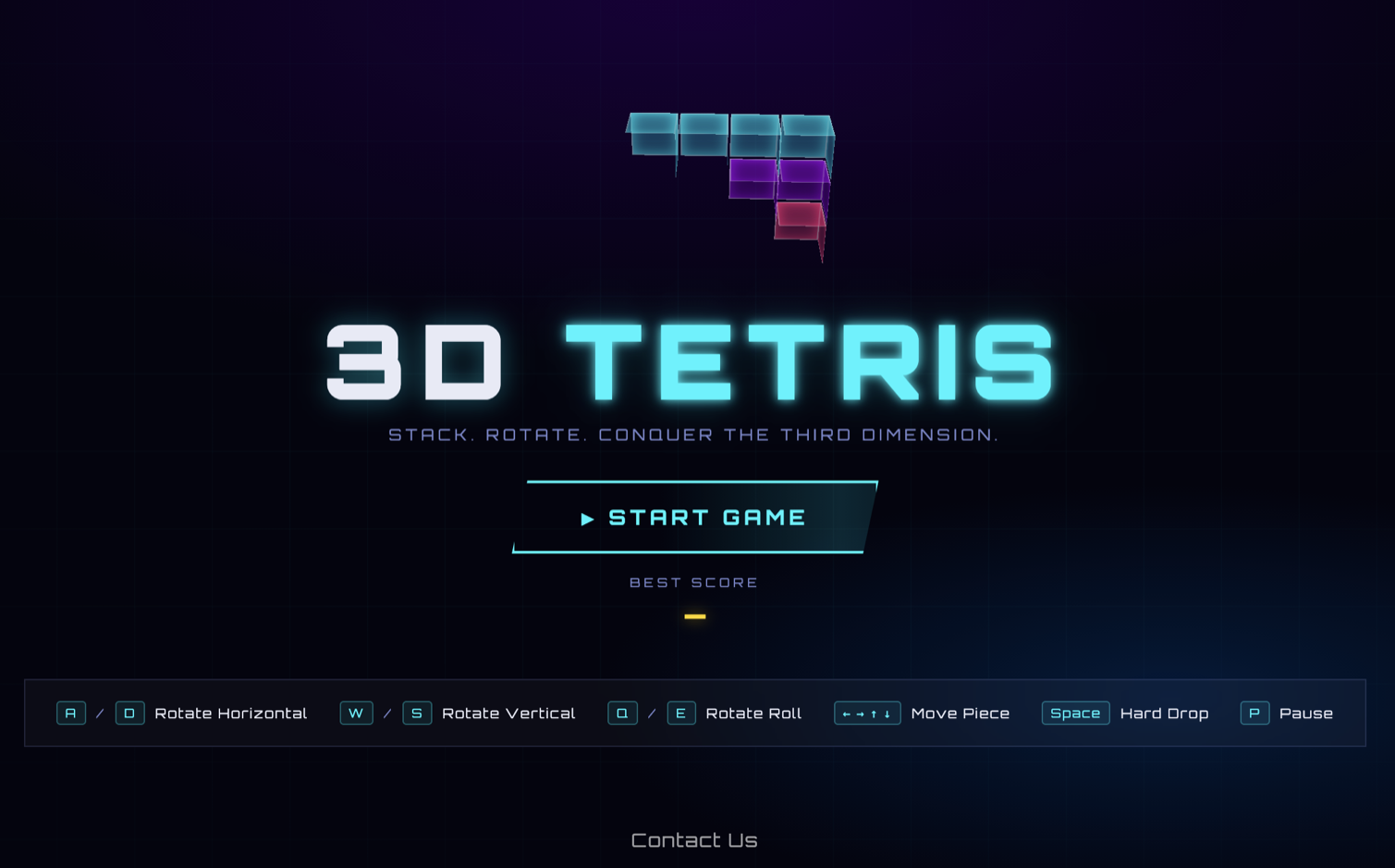
Fig 1 — The dark neon landing page of the 3D Tetris application
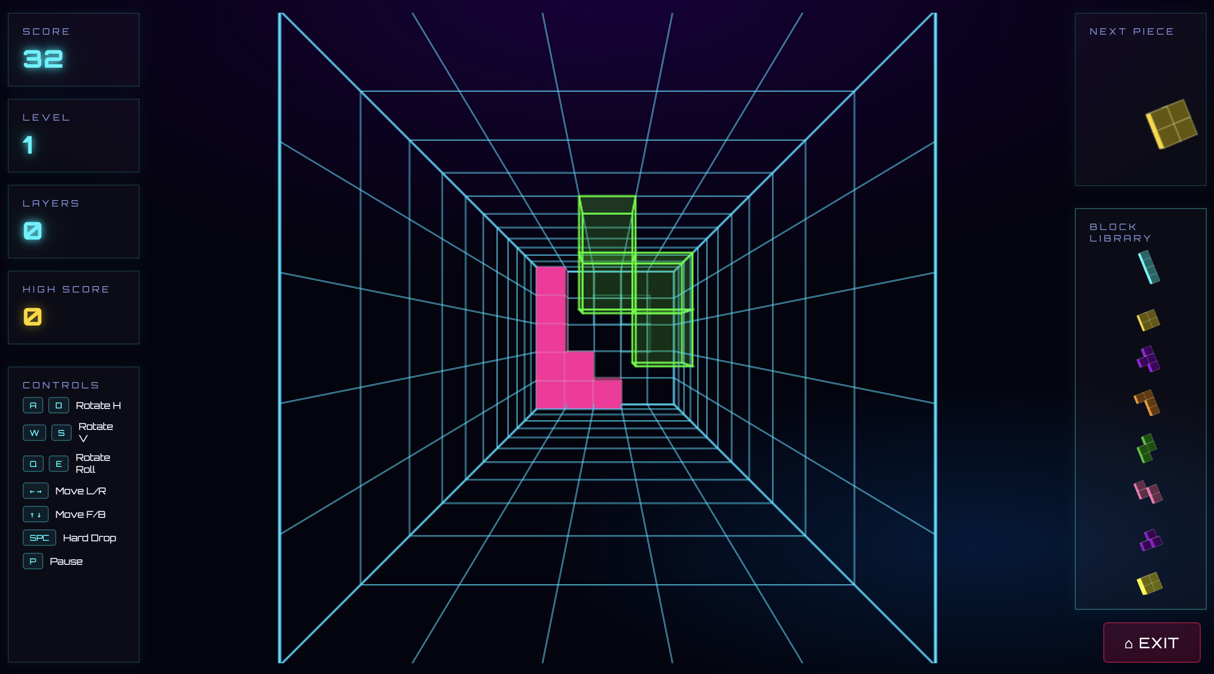
Fig 2 — The top-down isometric view of the 3D game well, showing a falling piece and the Ghost piece
Tech Stack
The technical implementation of this game is remarkably clean. It relies entirely on native browser capabilities with absolutely no external frameworks or 3D libraries (like Three.js). The entire rendering engine was built from scratch.
The game features a modular structure with separate systems for the `board`, `pieces`, `physics`, `renderer`, and `input`. The rendering engine uses HTML5 Canvas to draw the isometric, top-down transparent well, effectively creating a 3D illusion without a heavy graphics library. High scores are securely stored in the browser's `localStorage`.
Development Velocity
Building a custom 3D rendering and physics engine is usually a massive undertaking. However, through the power of AI orchestration, this complex game was brought to life in an afternoon.
⏱ Project Timeline
- ~2.5 hrs Core mechanics (engine, physics, renderer)
- ~1 hr Polish (UI, ghost piece, shadows, local storage)
- ~3.5 hrs Total time from idea to playable game
Project Statistics:
- Total Dev Time: ~3h 30mins
- Platform: Browser-based
- Methodology: Agentic Coding
- Orchestration: Antigravity Agent
🤖 Antigravity — Rebuilding the Past
- Custom Engine creation — The AI successfully built a bespoke HTML5 Canvas 3D renderer.
- Rapid prototyping — Complex 3D matrix rotations were implemented and tested within minutes.
- Nostalgia delivered — Turned a distant childhood memory into a tangible, playable reality.