The Limitations of Official Hardware
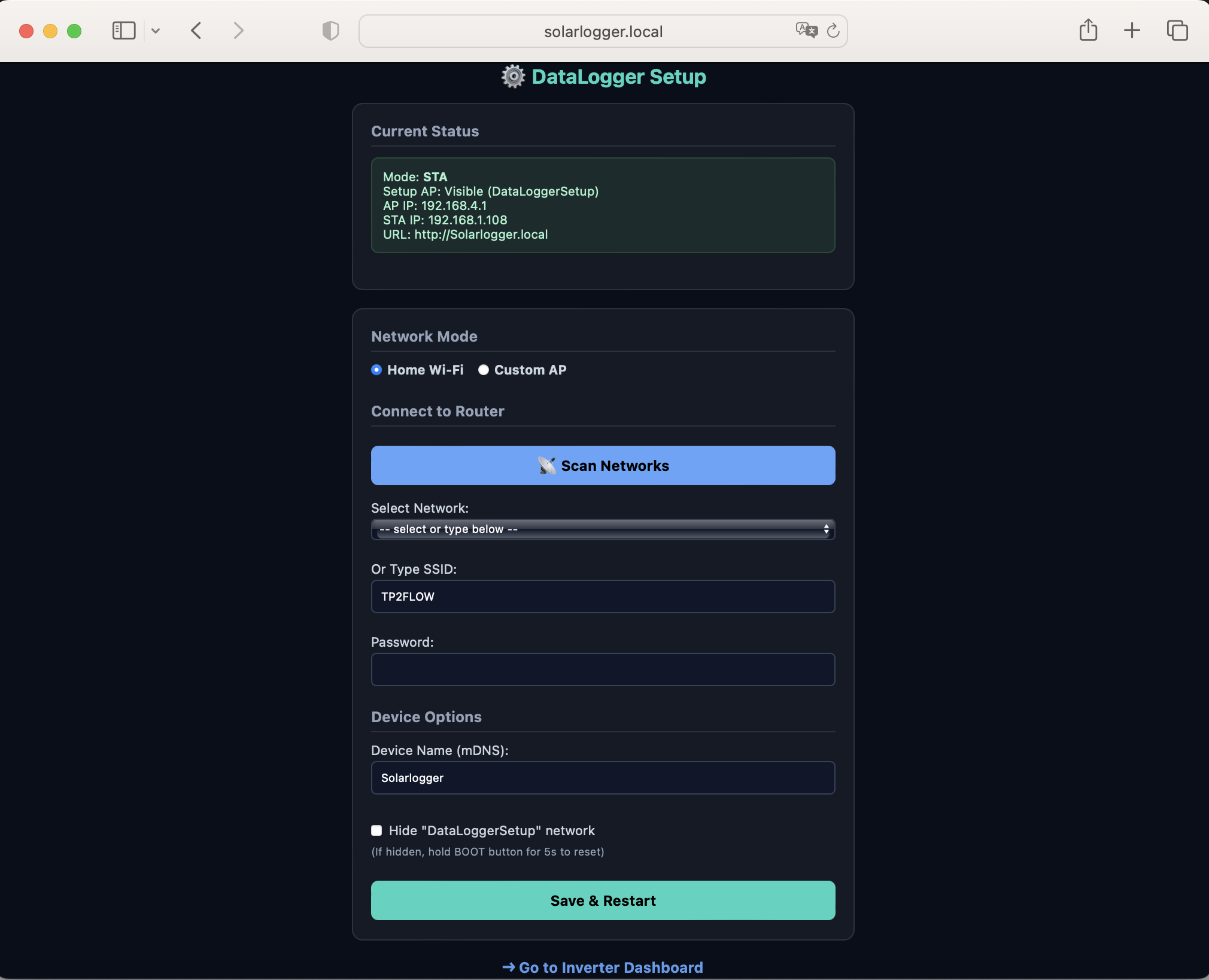
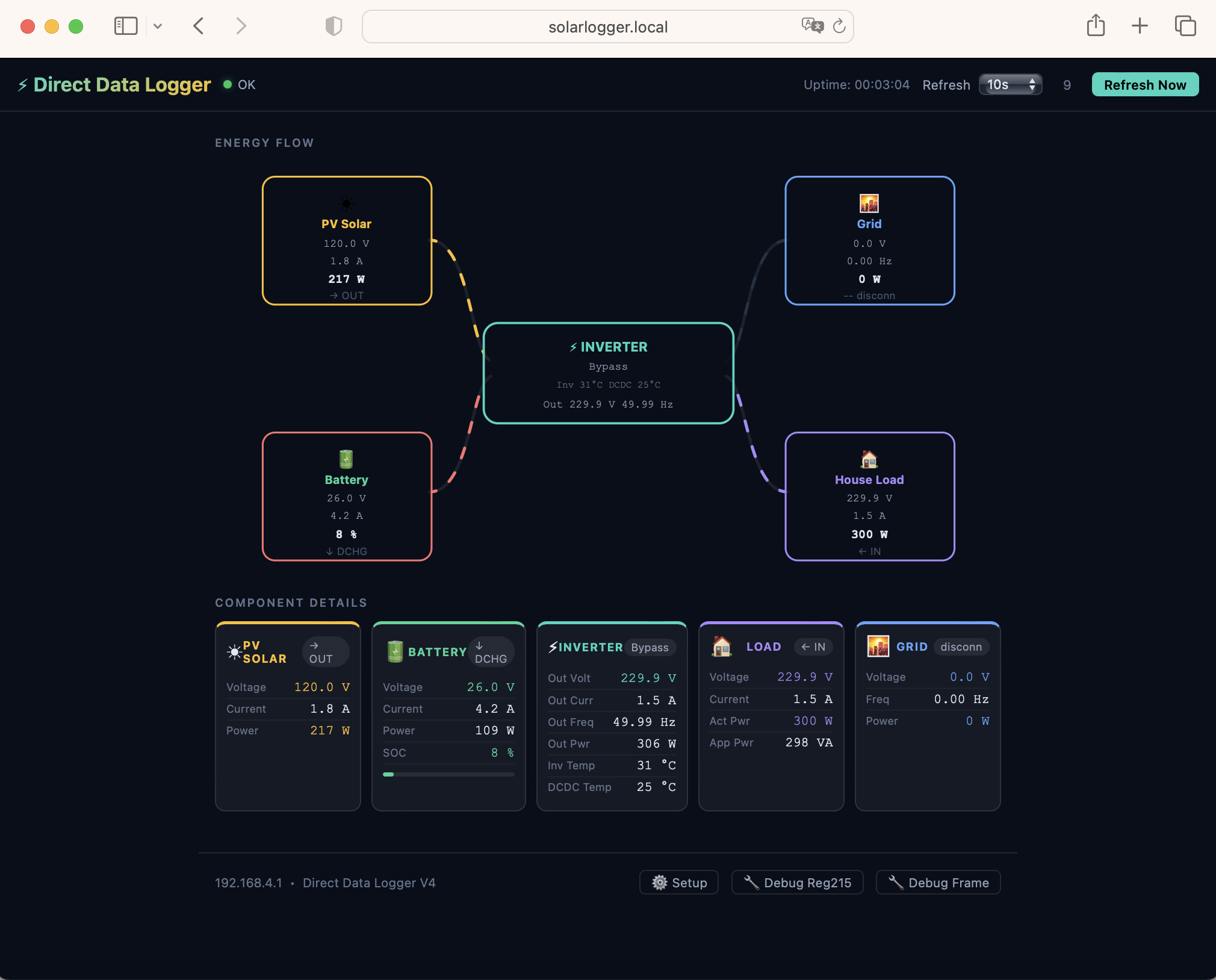
When I recently set up an off-grid solar system, it came with an official datalogger. While functional, I quickly discovered its limitations: the polling frequency was locked to a 5-minute interval unless I committed to a premium subscription tier. Furthermore, all telemetry was routed through an external cloud architecture before becoming visible to me locally. To overcome this, I envisioned building a localized, real-time data logger using an ESP32 microcontroller as the core processing unit, paired with a MAX3232 transceiver to interface with the inverter's DB9 serial port.
A Deep Dive into AI-Assisted IoT
Despite having minimal background in hardware engineering, this became my first comprehensive IoT project, heavily assisted by Generative AI. The entire end-to-end development spanned approximately one week, dedicating around 6 hours per day. A significant portion of this time was spent collaborating with Gemini to establish a solid Proof of Concept (PoC) and browsing specialized internet forums to track down the exact communication protocol specifications for my inverter model.
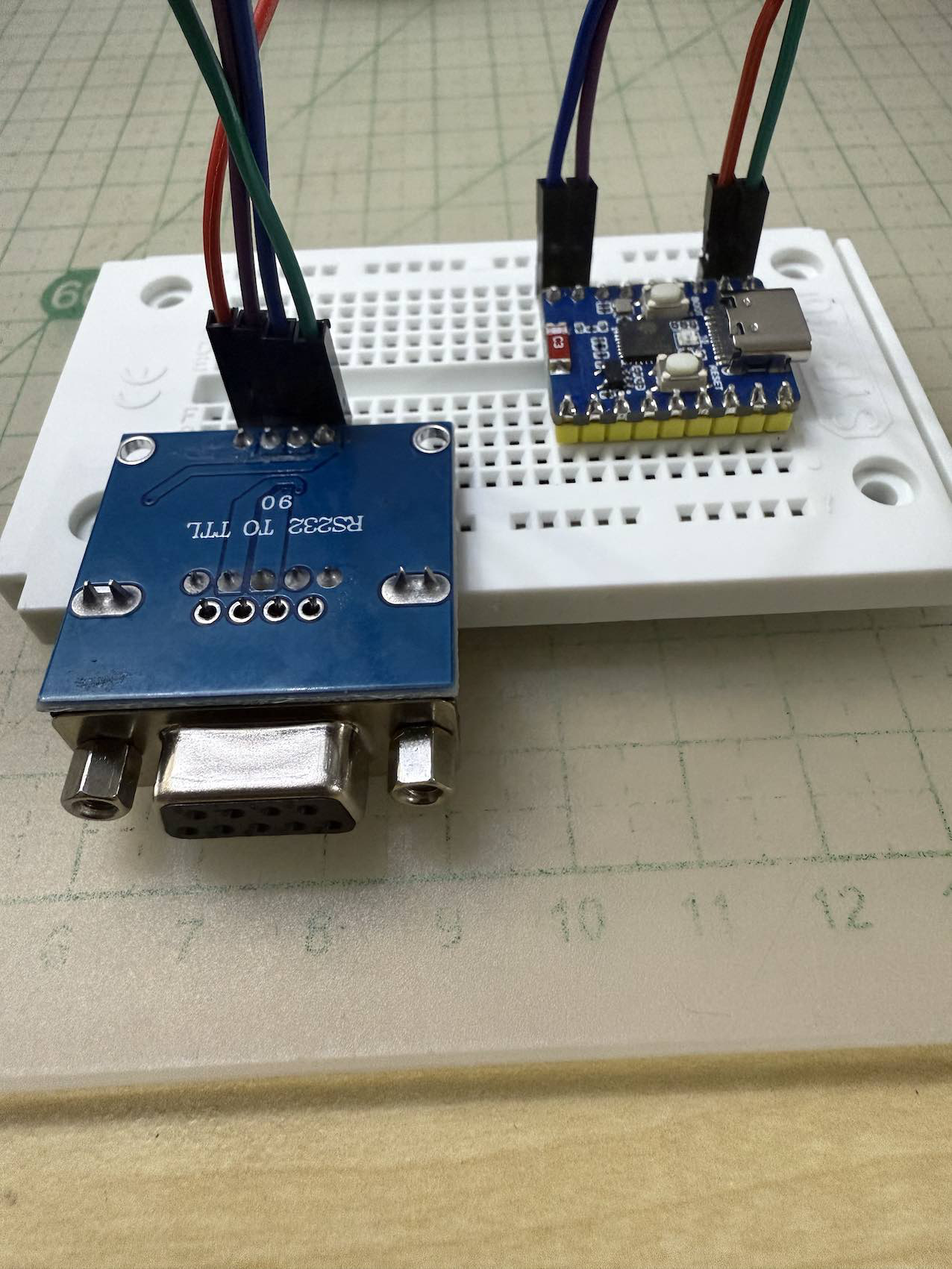
Rapid Code Generation with Antigravity IDE
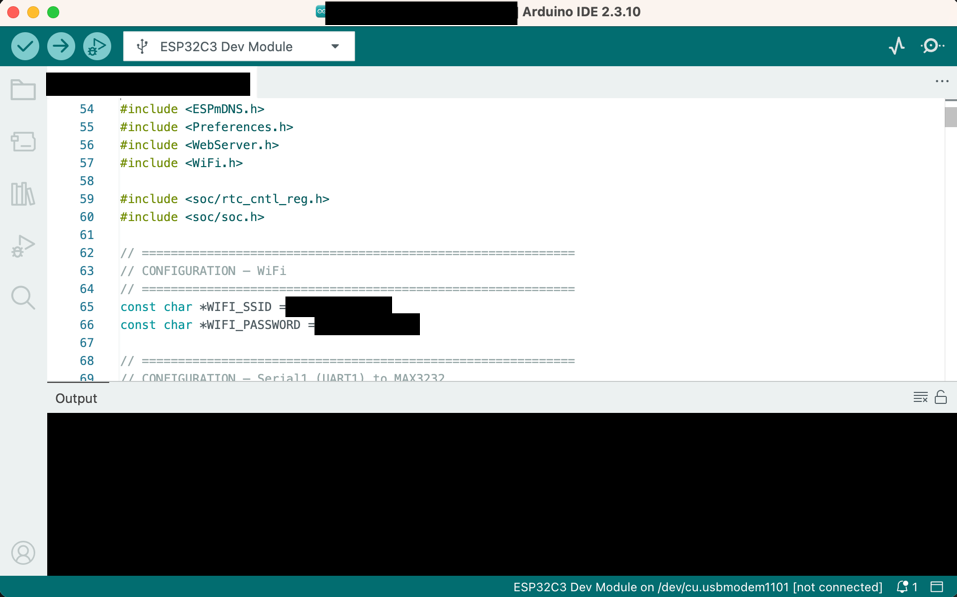
With the physical components procured and assembled, I utilized the Antigravity IDE powered by Claude to generate the C++ firmware for the ESP32. By simply uploading the inverter's manual—which confirmed the use of the MODBUS RTU RS232 protocol complete with CRC checksums—the AI rapidly produced the necessary logic.
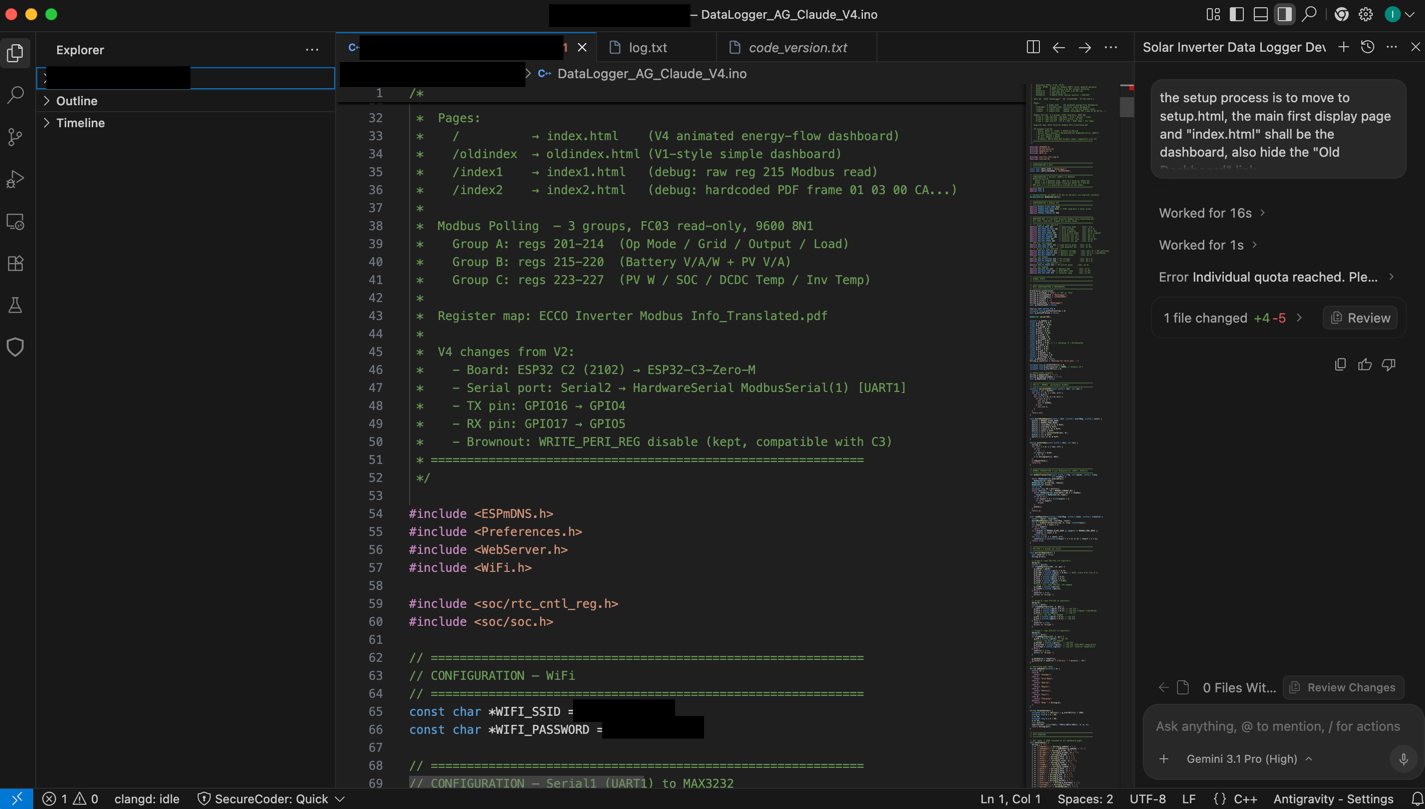
The code generation process was incredibly efficient. The initial output contained only one minor bug, which the AI autonomously identified and resolved during the iterative debugging phase.
Overcoming Hardware Integration Hurdles
The most challenging phase was the physical testing stage. Initially, the custom datalogger failed to establish any communication with the inverter, bringing the project to the brink of abandonment. Just before giving up, I consulted the AI one last time. It suggested a crucial hardware troubleshooting step: swapping the RX and TX wires (Pin 2 and Pin 3) on the DB9 interface. It turned out I was using a standard DB9 female-to-female cable when a "Null Modem" (crossover) configuration was strictly required. Implementing this simple pin exchange instantly established a stable connection.
Real-Time Local Telemetry Achieved
The completed IoT device now operates flawlessly, delivering near real-time solar generation metrics directly to my local browser, entirely bypassing unnecessary cloud round-trips. It stands as a testament to how AI can dramatically lower the barrier to entry for complex hardware integrations, enabling robust custom solutions at a fraction of commercial costs.